|
Getting your Trinity Audio player ready...
|
A Perspective on Public Policy and Institutions
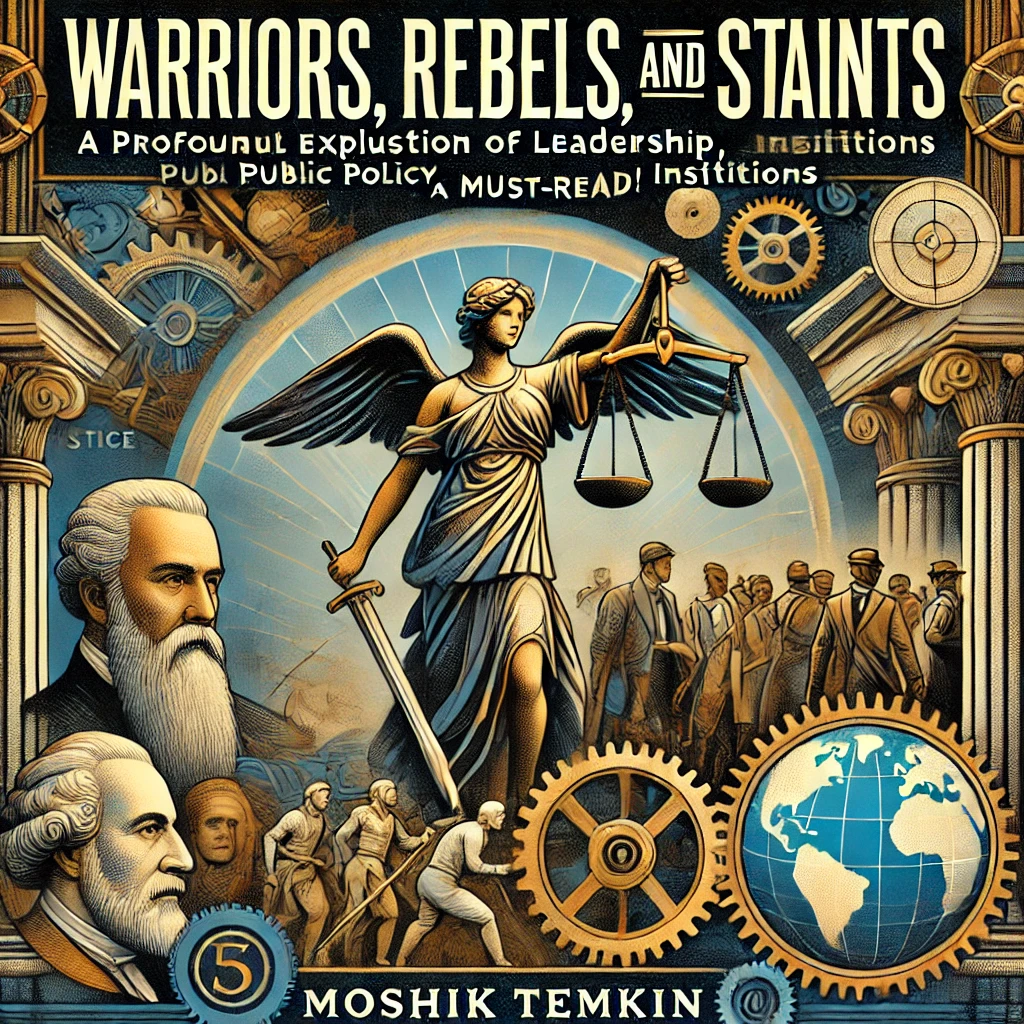
Moshik Temkin’s Warriors, Rebels, and Saints offers a fascinating exploration of leadership through the lens of history, drawing on the lives and actions of transformative leaders in different eras and contexts. The book is as much about the philosophical underpinnings of leadership as it is about the real-world implications of those ideas. For public policy professionals and those working in institutional governance, the book provides compelling lessons on power, accountability, and the role of leadership in shaping societies during times of change and crisis.
Leadership and Institutions: A Symbiotic Relationship
Temkin underscores that leadership does not exist in isolation—it is shaped by societal, political, and economic circumstances. As Chapter 1 explains, leaders are products of their environments, but they also actively shape the narratives of their time. This resonates with public institutions, which rely on leaders to navigate challenges but also constrain them through accountability mechanisms. The emphasis on divine authority in earlier leadership models (where leaders were answerable to higher moral standards) finds a modern parallel in democratic institutions, where the rule of law and public accountability serve as checks on power.
Institutions thrive when leaders adhere to principles of fairness and collective progress, as highlighted in Chapter 6. Public service is defined not by personal ambition but by the ability to align leadership with public good. For policymakers, this reaffirms the importance of ethical governance and decision-making that transcends personal or political gain.
Leadership in Crises: The Test of Policy Resilience
Chapters 2 and 3 delve into leadership during crises and under constraints, offering valuable lessons for public institutions. Temkin’s analysis of how leaders imagine solutions during moments of severe inequality and upheaval mirrors the challenges faced by policymakers today. Roosevelt’s assertion that progress is measured by how well it serves the most vulnerable is particularly relevant in contemporary public policy.
In moments of crisis, institutions must not only provide stability but also foster transformative leadership. Temkin’s insights into how leaders from marginalized communities, often with no formal power, catalyzed social and economic change (e.g., suffragettes or grassroots activists) demonstrate the potential of inclusive policies to empower underrepresented groups.
The Fragility of Democracy and Public Institutions
Chapter 7 is a stark reminder of the vulnerabilities of modern democracies. Temkin critiques the rise of economic inequality, technological monopolies, and privatization that erode public trust in institutions. Policymakers must grapple with the dual challenge of fostering innovation while ensuring equitable outcomes for all. The observation that elites disconnected from public concerns lead to destabilization is a critical call for more participatory governance and people-centric policies.
For public institutions, the lesson is clear: democratic resilience requires investment in the social fabric, mechanisms for equitable resource distribution, and ensuring that institutions remain accessible and responsive to the people they serve.
Leadership under Tyranny: Lessons for Institutional Strength
The analysis of leadership under tyranny (Chapter 4) highlights the adaptability and courage required to resist oppressive systems. For public institutions in freer societies, this serves as a cautionary tale about the importance of safeguarding democratic values and resisting authoritarian tendencies. Subtle acts of resistance and reforms within institutions can be as impactful as overt revolutions.
The Ethics of Leadership in a Technological World
Finally, in Chapter 8, Temkin ties together the threads of historical leadership with the challenges of the modern era, especially the ethical dilemmas posed by technological advancements. The widening gap between those who benefit from innovation and those who are left behind underscores the need for policies that prioritize inclusivity and transparency.
Public institutions must strike a balance between fostering innovation and mitigating its adverse effects, ensuring that technological progress benefits the many, not just the few. This requires leaders who can navigate complex ethical landscapes with clarity and a commitment to justice.
Conclusion: A Call for Ethical and Visionary Leadership
Warriors, Rebels, and Saints is more than a historical narrative—it is a handbook for those who shape public policy and institutions. Temkin’s exploration of leadership’s moral dimensions and its interplay with societal structures serves as a reminder that true leadership is about service, courage, and the ability to navigate complex systems for the greater good.
For policymakers, the book is a call to action: to build institutions that foster resilience, accountability, and progress, and to cultivate leaders who embody these values. In an era of polarization, inequality, and rapid change, the lessons from Temkin’s work are both timely and necessary.