|
Getting your Trinity Audio player ready...
|
The Intrusion of Surveillance: A Threat to Privacy and Democracy
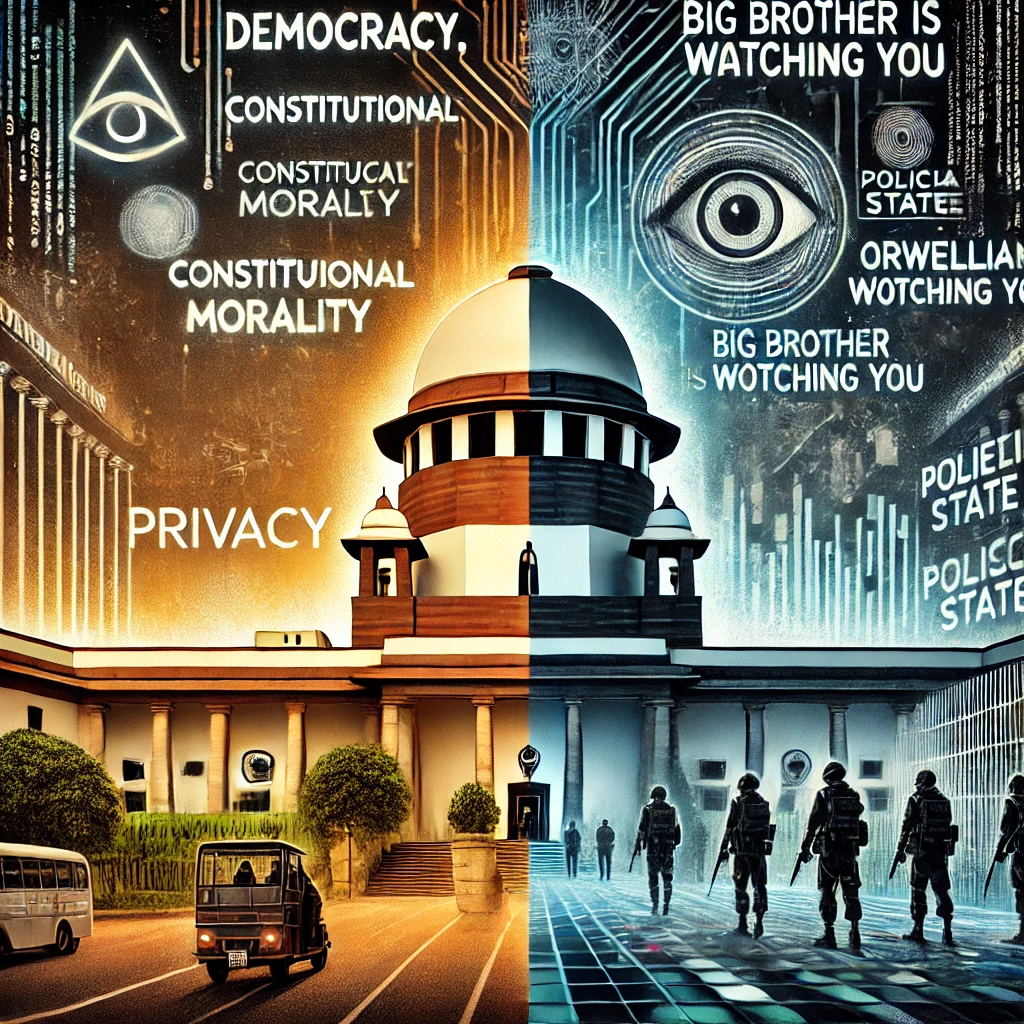
The right to privacy is one of the cornerstones of a free and democratic society. However, with the rapid advancement of surveillance technology, this fundamental right is under threat. From telephonic interceptions to the controversial deployment of automated facial recognition systems (AFRS), the boundaries of privacy are being pushed to unprecedented limits, often with severe implications for individual freedoms and civil liberties.
The Landmark Case: PUCL vs. Union of India
In the case of Public Union for Civil Liberties vs. Union of India, the Supreme Court of India highlighted the lack of procedural safeguards under the Telegraph Act and laid down guidelines for telephonic interceptions. These guidelines were an attempt to strike a balance between the state’s need for surveillance and the individual’s right to privacy. Yet, the issue of phone tapping continues to raise concerns. As the court observed, telephonic interception is a serious invasion of an individual’s privacy. The advent of sophisticated communication technology has made private conversations increasingly vulnerable to abuse, undermining the sanctity of one’s home and office.
The Pegasus Scandal: A Wake-Up Call
The Pegasus spyware controversy exemplifies the dire need for a robust data privacy law in India. Former Justice B.N. Srikrishna aptly pointed out that the government would have been as accountable as any private entity for the alleged breach of privacy by the Israeli NSO Group if India had a comprehensive data protection law. Without such a framework, citizens remain exposed to unchecked surveillance, eroding trust in democratic institutions.
AFRS: An Invasive and Ineffective Tool
Automated Facial Recognition Systems (AFRS) pose a dual threat: they not only create a biometric map of individuals but also have the potential to track, classify, and predict their movements. Deployed in a criminal justice system already biased against vulnerable groups, AFRS could exacerbate systemic inequalities. For instance, in 2018, the Delhi Police’s facial recognition system demonstrated an accuracy rate of merely 2%, highlighting its ineffectiveness. Such tools, when deployed without adequate oversight, can result in false positives, unjustly implicating marginalized communities.
Globally, concerns over AFRS are mounting. San Francisco has implemented a complete ban on police use of facial recognition, while police departments in London face pressure to abandon the technology due to evidence of discrimination and inefficiency. Despite these warnings, India contemplates AFRS in the absence of a robust data protection law. The Personal Data Protection Bill, 2018, yet to be enacted, contains broad exceptions for state agencies, leaving room for potential misuse.
Privacy as a Fundamental Right
The Supreme Court’s landmark judgment in K.S. Puttaswamy vs. Union of India affirmed the right to privacy as a fundamental right intrinsic to human dignity and autonomy. This principle was further reinforced in cases like Joseph Shine vs. Union of India, which decriminalized adultery, and Shafin Jahan vs. Ashokan K.M., which upheld an adult woman’s right to choose her partner.
However, the application of privacy principles has been inconsistent. For instance, the court’s handling of the Aadhaar case revealed structural limitations in constitutional adjudication. The composition of benches and the discretion exercised by judges often result in varied interpretations, undermining the uniform application of privacy doctrines. Furthermore, the political executive’s investment in surveillance programs frequently overrides considerations of fundamental rights.
The Chilling Effect of Surveillance
Surveillance not only infringes on individual privacy but also has a chilling effect on democratic freedoms. Journalists, activists, and whistleblowers, who play a vital role in holding power to account, often find their work undermined by the fear of being watched. This erosion of press freedom strikes at the heart of democracy, as it hampers the ability to provide accurate and reliable information to the public.
Social Media and Institutional Independence
Amid growing concerns over executive overreach, former Chief Justice N.V. Ramana’s observation about the influence of social media trends on institutions underscores the need for introspection. In an era where public discourse is increasingly shaped by online narratives, safeguarding institutional independence from external pressures is imperative.
Conclusion
The unchecked expansion of surveillance technologies threatens to undermine the fundamental rights that form the bedrock of democracy. From telephonic tapping to AFRS, these tools, if misused, can erode trust in institutions and jeopardize individual freedoms. As Justice B.N. Srikrishna cautioned, “Democracy will likely, like a Bellerophon, fall off Pegasus’ back” if robust safeguards are not implemented. India must prioritize the enactment of comprehensive data protection laws and ensure strict oversight of surveillance mechanisms. Privacy is not merely a legal right; it is the essence of human dignity and autonomy, deserving of utmost protection.