Book Review: Against The Grain
|
Getting your Trinity Audio player ready...
|
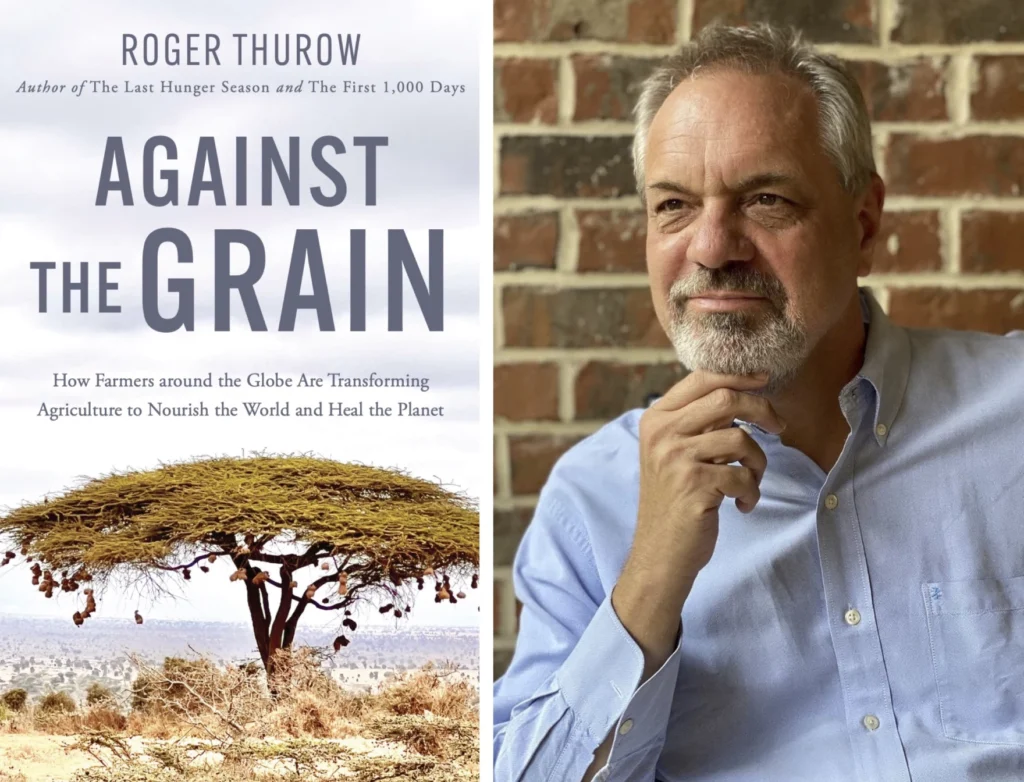
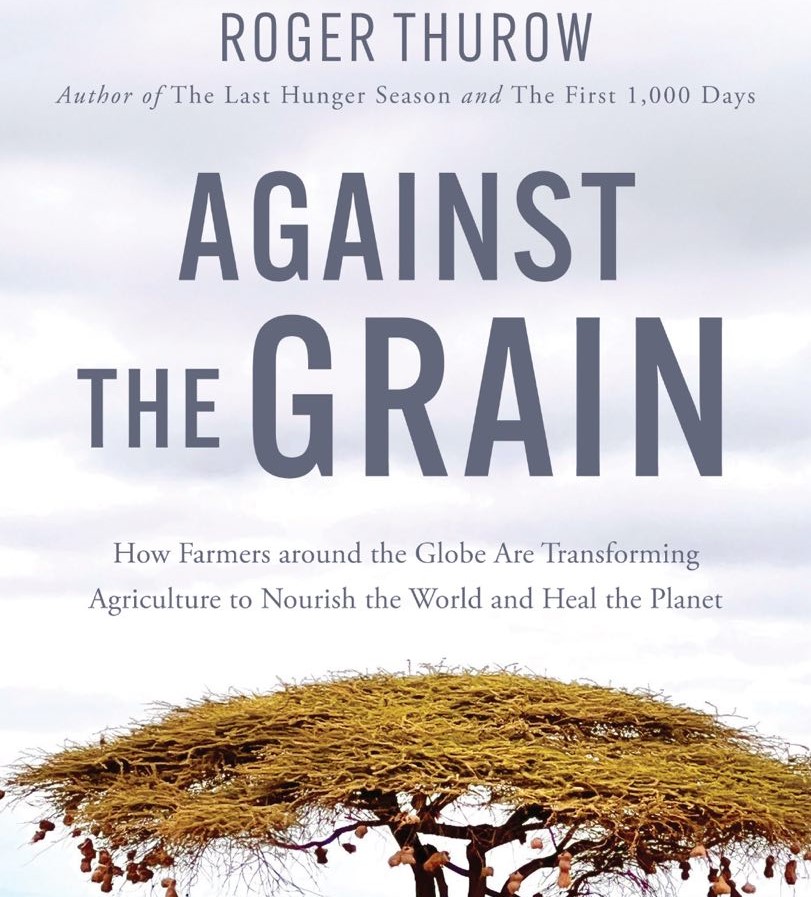
In his captivating book Against The Grain, published in 2024, Roger Thurow discusses the global agricultural patterns. The subtitle, “How farmers around the globe are transforming agriculture to nourish the world and heal the planet,” makes this point evident. In the article “Greenhouse gas emissions from agrifood systems,” Food and Agriculture Organisation (FAO) states that approximately one-third of greenhouse gas emissions come from agrifood systems. Deforestation and monoculture agricultural practices are the main causes of this. In addition author points that, it is because of absence of sustainable methods of cropping patterns with respect to the nature, disregarding nature has negative consequences on humans resulting in global warming.
The book is divided into six chapters, which are also the six global case studies on agriculture and cropping methods. Six case studies, share a common cycle. The author explains how the local food producers’ (farmers’) unfavorable policies towards nature caused the land to deteriorate. Various disasters, such as flash floods, uneven or delayed rainfall, and extended drought years, resulted due to same. Local farmers and landowners develop crop-growing methods based on the needs of the environment for the restoration of land. The case studies and stories are poignant and force us to consider the rapid devastation of forests and lands by humans.
The book starts with a prologue where facts about land degradation are introspected. Studies from World resource Institute (WRI), Food and Agriculture and Organisation, Global Foot print network, etc have also been mentioned. The prologue is the briefs about the global temperature rise, global warming and changing diet of humans. The author quotes Nobel Peace Prize acceptance speech delivered by Norman Borlaug, where he said “We will be guilty of criminal negligence, without extenuation… Humanity cannot tolerate that guilt.”
The three chapters are case studies on The Great Rift Valley (studies divided in Ethiopia, Uganda and Kenya), followed by Indo-Gangetic Plain, Pan-American highlands and lastly The Great Plains. To increase crop production, people in Ethiopia began chopping down trees of Humbo forest. This led to uneven rainfall, and as a result of the protracted drought, about 14 million people were in danger of starvation. Later, World Food Programme came up with new programme called as Managing Environmental Resources to Enable Transition to More Sustainable Livelihoods (MERET). The programme centred the work with the local communities. Food aid were given to the families and in return were asked to work on land rehabilitation projects. The local communities gave up farming for some years so that land is restored. Families also joined regreening projects led by faith based humanitarian organisation World Vision. With the return of forest, crop production became abundant. Humbo rehabilitation progress has become a model for land regeneration. Ethiopia plans is to plant 1.6 billion seedlings every year. To achieve this, rural communities are asked to contribute one month of every year for free labor. Similarly in Uganda along the Nile river, people started growing maize, cassava, peanuts, later farmers shifted to growing sugar cane crops. As sugar cane is the demanding crops and needs proper sunlight and water. Millions of trees were cut down to satisfy the needs of growing sugar cane. Pesticides and insecticides were used to increase the production. The production started to drop in few years. Sometimes fires consuming the fields of sugarcane, without tress and shrubs- rains became unpredictable, soil erosion was common, resulting in flash floods. Some farmers shifted to paddy, further negatively affecting soil, as rice being a thirsty crop took up ground water. The natural flow of river was disturbed due to rice and sugarcane cultivation. The chemical fertilizer mixed in river further impacted the fishing communities. Later, techniques of integrating trees and shrubs with crops were practised. Super foods like Mucuma beans, Amarannth, Moringa trees were grown which are friendly to soil nutrients. This helped to increase the income of farmers and maintaining the lost ecological balances. Trenches to collect rainwater were built, raised beds to conserve water (vegetable beds, fruit beds were made, each layer helps the other layers). Cultivating sugar canes and rice was abandoned and teachings of agriculture in harmony with forests and wetlands were practised. The author notes that the rates of malnutrition dropped, children are again going to schools, there are no famines, female stopped talking of witchcrafts and understood it was malnutrition. The life was restored in many parts of Uganda.
In Kenya, the condition was different. Kenya is also recognized as the land of milk and honey. Farmers started planting variety of Brachiaria (variety of grass), this increased the milk production and reduced the methane emissions. Wangari Maathai, Nobel peace prize laureate stir the hearts of Africans she said “You cannot protect the environment unless you empower people, you inform them, and you help them understand that these resources are their own, that they must protect them.” Farmers started preserving water and sustainable using it. With using local variety of grass, farmers reduced the methane emissions addressing the climate change in short term. The practice like jeans garden (where the bottom of the pants themselves are planted in the dirt, legs are filled with soil up to the waist, so the jeans stands like pillars) are practised. Vegetables rise above the top; vines poke out of holes in the pockets. People also planted TV garden, various vegetables planted in discarded television sets, as scrap heap makes good vegetable beds. During COVID families started to producing vegetables in their verandas. If many people start growing their own food, this can result in urban micro-environments, with cooling effect and cleaner air.”
Chapter fourth, is about Indo-Gangetic plain, the Indian case study. The author notes about the stubble burning and importance of Indo-Gangetic plain which feeds around 40 percent of Indian population. The author is concerned about rising heatwaves in India due to agricultural practices in the plains. The government also has given subsidies on rice and wheat promoting the cultivation of rice and wheat. There is also the lack of infrastructure in supply chain resulting in food income loss to farmers. Author takes various instances where local community started their own supply chain of cooling vans (refrigerators). They started supplying fruits to various parts of country and increased their income. They have given up old practice of sowing paddy, wheat and sugar cane which resulted in negligible use of pesticides and insecticides generating more income to farmers.
In fifth chapter the author gives example of Pan-American highlands where many farmers gave up the cultivation of maize and adopted the practice of cultivating fruits and vegetables. As Maize is one season crop, growing it is becoming more challenging. Some farmers have adopted to grow vegetables like tomato in greenhouses to control the environment and increase the yield. More sustainable practices like drip irrigation methods, organic manures have been adopted. As the incomes of farmers increased the malnutrition of among children reduced. There are many instances and cases showing the impact of climate change in the region. Lastly, in the great plains of America between 2016 and 2020 lost more than seven million acres of grassland to crop production. There were various interventions by the U.S government as Biden administration allocated 3 billion dollars to reduce agricultural sector’s green house gas emissions. Some farmers have shifted to cattle’s mostly buffaloes and livestock’s, this has helped to repair the soil as adding manure (from livestock and buffalo) as it is rich in nitrogen and phosphorus. buffaloes leave plants for other animals to graze instead of grazing everything, the author highlights the significance of buffalo in the field. He tries to explain the differences between cows and buffalo as well as the significance of buffalo in regenerative grazing practices. The entire pasture turns to sandy soil as a result of overgrazing caused by cows simply standing and eating. Buffalo can knead the soil in a different way than cattle because of their structure. Author explains through various case studies that every part of buffalo is used- meat of buffalo is leaner and has less fat and is rich in protein. He made an important point regarding the indigenous people who must be at the table not only as equals but as leaders. Only indigenous people can bring regenerative agriculture methods into practice.
Overall, the book is rich in culture and diverse agriculture practice. The author tries to intrigue readers through various case studies around the globe. As the population is increasing in developing nations like south Asian countries and under-developed nations like African countries, there would be need to increase the crop yield to feed the growing population. This can be only done by bringing more land into agricultural practice (by clearing forest) and through increasing production by practicing sustainable methods. With climate change, unpredictable rains, flash floods and frequent droughts are the challenges human kind would be facing. It is through the sustainable agriculture methods this can be done. Against the Grain is testimonial to various sustainable agriculture practices humans can feed the growing populations without disturbing the climate and through reduced green house gas emissions. It reminds of Gandhi’s quote that “There is enough for everybody’s need and not for everybody’s greed.” Through technological advances both government and communities have to take a leap forward for intensive and inclusive farming methods. One small step for nature, one leap for mankind.
Authored by Manish G. Narwade
You can purchase the book on this website: https://www.amazon.in/Against-Grain-Farmers-Transforming-Agriculture-ebook/dp/B0CST1J4D8?crid=239KOXALBNHHO&dib=eyJ2IjoiMSJ9.0c8FWJ_5J0Xe15E2zjyR2ccLw-6kb-qk7F6niJ5Qz2medfap6HJoDHdS0xwuCGE9Ua7gJvD6g4kUAsYMUxhWn75p6kT3kOlgzzw8aDQQAVsPhN7ITTAG1kMLn44DjAJMsP6iIcUJ_BRZM5akK3rPNg.RJkX6cXZ_INNO3UDUxpnCkl0opLyu0RNvG2SLaB1fNE&dib_tag=se&keywords=Roger+Thurow&qid=1738930921&sprefix=roger+thurow%2Caps%2C226&sr=8-5