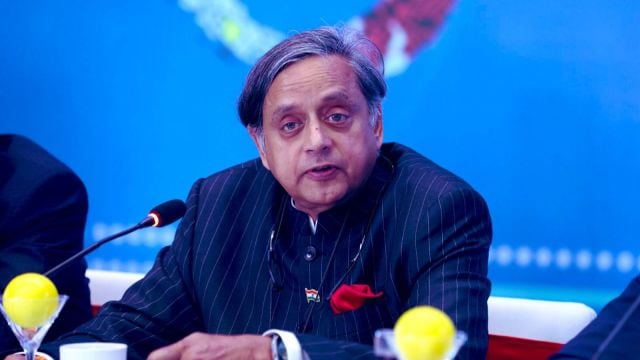
Shashi Tharoor, a prominent Indian politician, diplomat, and writer, has authored numerous books that blend history, politics, and public policy analysis. His works are particularly valuable for public policy students due to their deep insights into governance, international relations, and India’s socio-political landscape. Below is a list of key Shashi Tharoor books, along with reasons why public policy students should read them:
Pax Indica: India and the World of the 21st Century (2012)

This book offers a comprehensive exploration of India’s foreign policy and its role in global affairs. For public policy students, it provides a framework to understand how emerging powers navigate international relations, manage diplomatic ties, and address global challenges like climate change and terrorism. Tharoor’s analysis of India’s strategic priorities is a practical case study in crafting effective foreign policy.
India: From Midnight to the Millennium and Beyond (1997)

This work examines India’s journey since independence, covering issues like democracy, economic transitions, and social challenges such as caste and poverty. Public policy students can gain insights into how historical context shapes policy decisions and how India balances diversity with governance—an essential lesson in managing pluralistic societies.
The Paradoxical Prime Minister: Narendra Modi and His India (2018)

Tharoor critiques the policies and leadership style of Narendra Modi, using data and examples to analyze governance under his administration. This book is a must-read for students interested in understanding how political leadership influences policy outcomes, offering a critical perspective on contemporary Indian public administration and its implications.
An Era of Darkness: The British Empire in India (2016)

This book dissects the impact of British colonial rule on India’s economy, society, and governance structures. Public policy students can learn how colonial legacies shape modern institutions and policies, providing a historical lens to analyze current development challenges and policy frameworks in post-colonial states.
The Elephant, the Tiger, and the Cellphone: Reflections on India in the Twenty-First Century (2007)

A collection of essays, this book covers India’s transformation in the globalized era, touching on technology, economy, and culture. Public policy students can use it to explore how rapid societal changes demand adaptive governance and innovative policy solutions, particularly in a developing economy.
The Battle of Belonging: On Nationalism, Patriotism, and What It Means to Be Indian (2020)

This book delves into the concepts of nationalism and identity in India’s policy discourse. For students, it highlights how ideological debates influence public policy, especially in areas like citizenship, social cohesion, and governance—a critical perspective for understanding policy in diverse nations.
These books collectively offer public policy students a blend of historical context, contemporary analysis, and theoretical insights. Tharoor’s ability to connect India’s past with its present and future makes his works invaluable for understanding the complexities of policy-making in a dynamic, democratic setting.