
The emergency period in India is often recalled as a time when the country’s constitutional framework faced a breakdown. However, this breakdown was orchestrated by Indira Gandhi through a political approach, where she, as Prime Minister, held responsibility for undermining the constitutional order. This is very different from American constitutional breakdown during American Civil War (1861 to 1865) when Abhraham Lincoln’s electoral victory played a key role in sparking the secession of Southern states from the Union. Rather, it was the individuals from southern states revolted against the backdrop of their interests breaking the constitution through social terms. The constitutional crises was from the civil society itself, rather than from political institutions unlike India. Indira Gandhi used the lower-court judgement as a pretext for declaring state of Emergency and jailed her principal parliamentary opponents. Later, the Moraji Desai government passed amendments guaranteeing that there would not be another round of Emergency. The constitution was placed and later Indira Gandhi won the landslide victory never dared again to challenge the constitutional aspects of democracy.
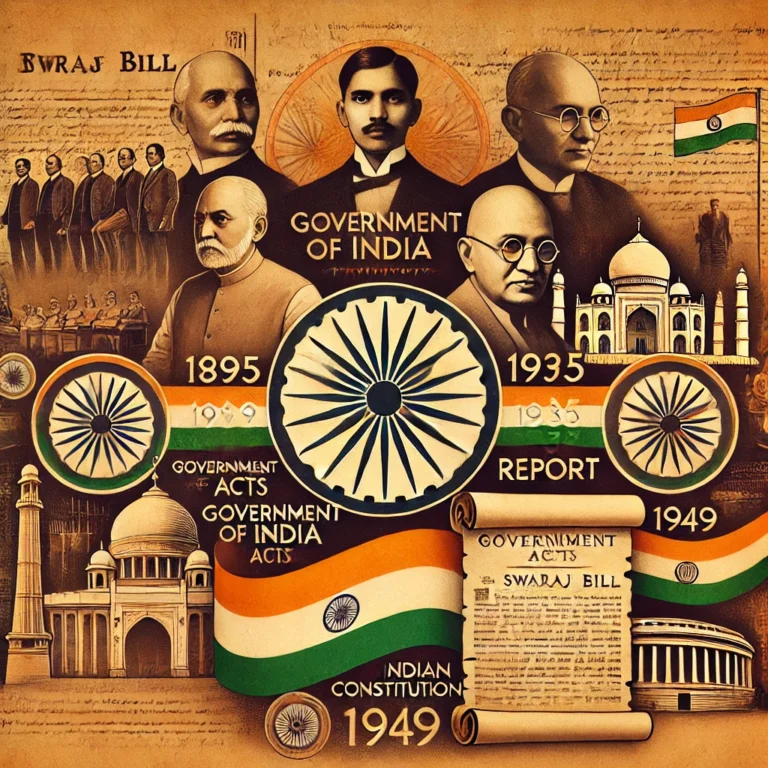
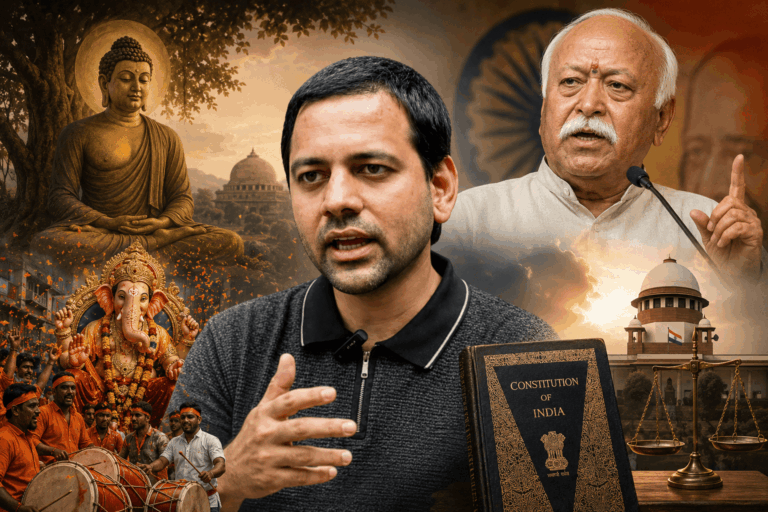
Soon after Narendra Modi was elected similar effort was made by bringing National Judicial Appointments commission- which was seen as direct assault on the judiciary and separation of powers enshrined in the Indian constitution. The Judges didn’t allow the assault and stuck down by panel vote of 4 to 1. Bibek Debroy, who serves as the chairman of Prime Minister economic advisory council since 2017 had written an article in Live Mint called as ‘There’s a case for we the people to embrace a new constitution.’ He cited the current constitution is largely based on Government of India Act 1935, giving it a sense of colonial legacy. In the real sense, the Government of India Act 1935 was made for the Indians. The current Indian constitution was meticulously crafted by the constituent assembly, addressing the country’s complex realities through an extensive and descriptive draft. It has undergone over a hundred constitutional amendments, rendering it a ‘living document.’ Recently, Chief Justice in the case ‘Article 370’ pointed out Article 3, which made mandatory for the president to consult the state legislatures before altering the status of a state. Bibek Debroy critically analyzed the problems and Vision of 2047 and questioning the governor’s role. Supreme court from time-by-time analyzed the Governor’s role. For instance, recently in Sena Vs Sena case, SC slammed and criticized the governor’s role. Supreme court also ruled on the selection of Chief election commissioner and quoted for high-power committee consisting of prime Minister, Leader of Opposition and Chief Justice to appoint the CEC. This shows how the institutions are placed to attain the idea of liberty, equality and fraternity.
Bibek Debroy also mentions about the What Constitution does India need for 2047? In the regard it would be to attain social, economical, and political justice, Abolition of untouchability, houses of scheduled caste to be build in center of villages not on the outskirts. As long as we attain social liberty, whatever the freed is provided by the law is of no avail to us, said Ambedkar. In Puttaswamy judgement courts have broaden the definition of liberty. By nullifying section 497 oof IPC in Joseph shine case and legalizing the same sex marriage the court have time to time with the help of provisions of constitution have evolved the definition of liberty. The real meaning of words secular, democratic, justice, liberty and equality have only broadened with the passage of time. The constitution has also made the provisions the economic reforms of 1992 by enlarging its view on liberty and equality. Attaining social liberty should be the goal.
The Indian constitution through article 15(4) has permitted states to make the special provisions for the upliftment of the socially and backward classes (majorly Scheduled caste and scheduled tribes). This paves the way for affirmative actions for the unprivileged classes. Whereas the US constitution which lacks these provisions makes the affirmative actions on the will of legislature or on supreme court. Through the U.S. Supreme court in the case ‘Students for fair admission vs. President and fellows of Harvard college’ held that admission does not comply the principles of equal protection, hence ending the race-based affirmative actions in college admissions. In India case, for instance the supreme court in the judgment A. Periakaruppan Vs. State of Tamil Nadu (1971) held that reservations (affirmative actions) are necessary for improving the conditions of backward classes. This shows the intellectual maturity of Supreme court which upheld the provisions made in Indian constitution.
Bringing amendments to fix the system is welcomed but the idea of embracing new constitution doesn’t hold any validity. The indicators of human development index, sustainable development goals have already enshrined in the Indian constitution through directive principles, fundamental duties and more-or-less fundamental rights. It is through the proper implication of laws and efficient bureaucracies the development can be achieved. B.R. Ambedkar’s words should be a lighting torch where he says “However good a constitution may be, if those who are implementing it are not good, it will prove to be bad. However bad a constitution may be, if those implementing it are good, it will prove to be good.”
(This article was published as lead editorial on 22nd September 2023 in Telangana Today)