
|
Getting your Trinity Audio player ready...
|
India’s creative economic workforce—from informal artisans to digital creators—remains largely invisible in official data systems. Recognizing, measuring, and protecting this sector is essential for inclusive growth, youth employment, and culturally rooted urban development.
The orange economy, referred as creative economy has became the major force in the world during the time of technological advancements and has emerged as global powerhouse. The sector is now contributing more than 3% of global GDP and generating more than $4.3 trillion in annual revenue and sustains close to 50 million jobs in world.
The nature of creative work is fluid and nonlinear. It involves individual talent as well as team work, artistic creation and technological innovation, cultural heritage and global networks. Many cities such as Mumbai, Berlin, Mexico-city, London, Berlin, Lagos, Cape Town and Seoul are especially dynamic in a very exciting moment in time where digital content production, performance arts and cultural industries are transforming not only economies, but also the identities and life styles of both individuals and communities.
The “group of economic activities that build on human creativity to generate goods and services whose value can be protected by intellectual property rights” is how the Inter-American Development Bank characterizes the orange economy. This includes industries such as publishing, music, visual arts, fashion, architecture, visual arts, film and gaming. But much of this work is done by people working in the “gig economy,” microenterprises and freelancers operating outside the official system; as a consequence, that work is not adequately captured in national accounts or protected by labor laws. This invisibility has an effect, as well, on protecting oneself from exploitation, insecure employment and uneven access opportunities.
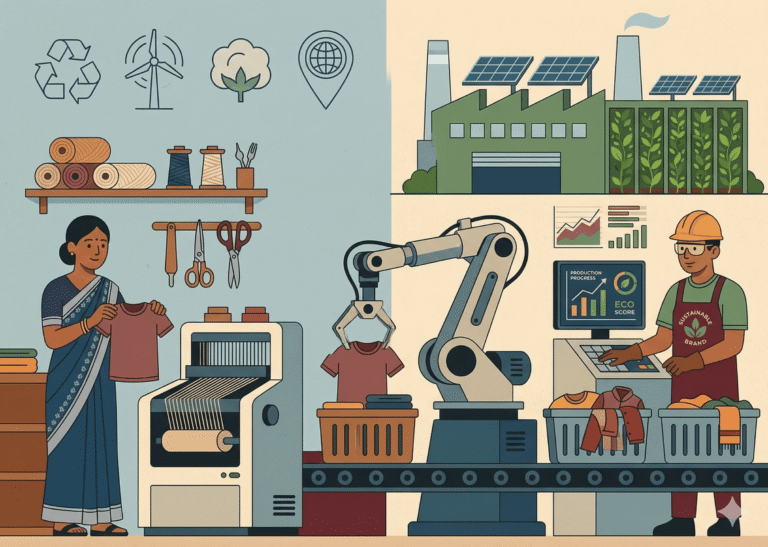
Globally, around half of all jobs in the orange economy are held by women and youth. For young people aged 15–29, the creative sector offers more employment than any other sector—especially in urban areas where internet access, mobility, and education have expanded the scope of work. This makes the creative economy a strategic solution to one of the world’s most pressing challenges: youth unemployment. In India, where millions of educated young people enter the workforce each year, investing in creative skills, intellectual property literacy, and digital access could unlock massive employment potential. Yet, most creative workers in India and elsewhere remain in the shadows of formal labour markets. For instance, Solapuri chaddar a handicraft from Solapur district of Maharashtra provides direct employment to more than fifty thousand workers also empowering women leading to financial independence, there are around 6000 power loom industries ranging in MSME sector.
Accurately measuring creative economy is a strategic vital, not just a statistical exercise. Policies run the risk of being outdated or discriminatory if there is a lack of a thorough understanding of who is engaging in creative work, under what circumstances, and with what results. An informal carpet weaver in a rural cluster, for example, might make an equal contribution to the cultural and economic life of a designer in a posh urban studio. Only one may be acknowledged or counted, even though both may be dependent on one another through supply chains. Integrating such informal workers into national data systems through targeted surveys, cultural mapping, and digital registries could lead to more responsive policies. The upcoming Indian Census offers an opportunity to document the scale and impact of the creative economy. It can create the foundation for a more resilient and just orange economy in the years to come by guiding more inclusive planning and policymaking.
Cities are ideally situated to spearhead this change. They are now not simply administrative or industrial city: but a social lab, a cultural laboratory and a creative hub, because of the post-Fordist world economy. It’s not just that cities contain the creative economy. We can see how it actively shapes it with Bombay film, Lagos music, Berlin’s performing arts, or Bandung’s food and fashion. They have an ideal combination of entrepreneurship, a deep storied heritage and a demographically rich population. They have things other regions and countries do not because they allow risk-taking, broad-based innovation, trans disciplinary work and communal problem-solving. But there are challenges to productivity as well. Art and culture-led urban renewal has its downsides such as land speculation, gentrification, and displacement of the very people who give character to cities. Hence, the balance between rapid growth and equitable design becomes necessary to safeguard social inclusion.
Other industries are also significantly impacted by creative work. In every sector, creative professionals enhance the user experience as well as the branding and marketing. For example, a street artist’s mural can attract tourists; an e-commerce graphic interface designer can help boost online sales; and a musician can spark inspiration for ad campaigns. Often, cultural districts develop into vibrant commercial centres that draw technology companies, co-working spaces, and even cafes. These cross-sector advantages demonstrate that creativity is beneficial not just for its results, but also for the culture it nurtures.
Global technology platforms that control creative distribution present another difficulty. These platforms frequently enforce their own success criteria and algorithms, which might not be consistent with regional expressions or values acclaimed, seen, or bought artifacts and artworks might differ from reality if indigenous artistic expressions or non-market narratives are ignored by algorithms. The global application of these tools endangers local cultures in favor of the homogenized appearance. Take, for instance, the uniqueness and imagination of Ghibli art, which the AI started to generate at the flick of a button, much to Japan’s culturally rich admiration, was suddenly interrupted. To safeguard cultural plurality and creative freedom amid rampant digitization, it is important that lawmakers and creatives alike maintain a watchful eye.
Cultural value also has social, emotional, and symbolic significance. In Dialectic of Enlightenment, Theodor Adorno warned against the commodification culture. To critique how capitalist thinking can strip art of its critical power and turn it into mere entertainment or commerce, Adorno introduced the concept of the “culture industry.” As cities seek talent and innovation, they should remember what makes them truly human and creative: their people, stories, and their inherent contradictions. In addition to galleries, concert halls, and other formal art venues, street spectacles, artisan markets, and other civic subcultures also merit attention in urban cultural policies because they add to the distinguishing rhythms of the city.
What best defines and sets a creative city apart is that it is an ecosystem, vibrant, in which ideas, identities, and industries intersect. It’s more than a slogan for marketing or a tourist site. The “orange economy,” arguably, is invaluable as a pillar for sustainable development; as it drives inclusive growth, economic diversification, and cultural resilience. Still, businesses would need to rethink the definitions of work, value of community investment, labor, and public policies to unlock its potential. It must extend beyond tokenistic aid. Governments need to focus on nurturing creativity from the local neighborhood stage to the global stage. There is a desperate need for better data systems, more inclusive laws, public-private partnerships, and most importantly, acceptance that in the 21st century — the creative economy is critical, not optional.