|
Getting your Trinity Audio player ready...
|
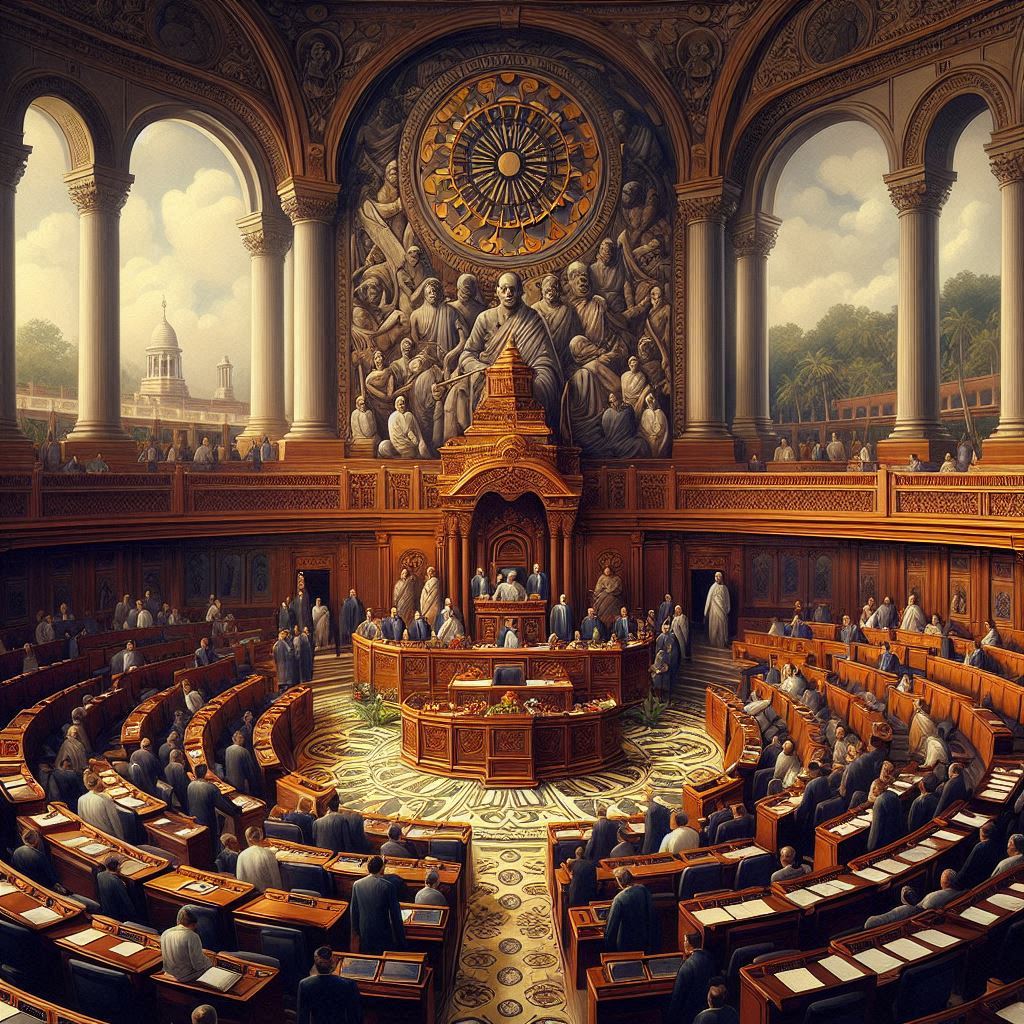
The office of the Speaker holds great importance in any deliberative assembly, and Indian democracy is no different. The institution of the Speaker originated in 1921 under the “Government of India Act, 1919,” popularly known as the Montagu-Chelmsford reforms. The rank and precedence of the Speaker of the Lok Sabha are equivalent to that of the Chief Justice of India, placing it above cabinet ministers and below the Deputy Prime Minister. In joint sittings of the Lok Sabha and Rajya Sabha, the Speaker presides, highlighting the significance and importance of the office. The BJP, being the single largest party, wants to hold the office of the Speaker, whereas the TDP (an ally in the NDA government) also seeks this position.
The Speaker wields immense power, being the sole interpreter of the rules and procedures of the house, and the final interpreter of the Constitution of India within the house. The Speaker maintains discipline, adjourns the house, and has the power to permit motions of censure. As the ex-officio chairman of the Indian Parliamentary Group, the Speaker appoints the chairmen of all parliamentary committees of the Lok Sabha and supervises their functioning. In the winter session of 2023, more than 140 members were suspended by the Speaker of the Lok Sabha to ensure the smooth functioning of the house; all the suspended members were from the opposition, demonstrating the Speaker’s significant powers of suspension. The Speaker also has the authority to remove remarks made by any sitting Member of Parliament from the record.
In the last decade, the Speaker of the assembly has played a crucial role in various instances, most notably in the decision to classify certain bills as money bills (bypassing the Rajya Sabha), the passage of the farm bills, and in state assemblies to topple governments (especially in Maharashtra). The Speaker has the power to decide on questions of disqualification of members, a potent tool for the successful implementation of “Operation Lotus.”
The Current and 1999: TDP’s Speaker – Point of Contestation
In February 1998, the BJP formed the National Democratic Alliance (NDA) with AIADMK, BJD, SAD, among others, totaling 259 seats, just short of the required majority. A post-poll alliance with TDP, INLD, and three independents brought the total to 282 MPs, a tenuous margin. The BJP offered the prestigious position of Speaker to TDP, and Balayogi presided over the 12th Lok Sabha. Even AIADMK leader J. Jayalalithaa, who emerged as a kingmaker, secured six union ministerial positions. Within a year, INLD withdrew support, reducing NDA’s tally to 280. During a no-trust motion against Vajpayee, the Speaker’s vote became crucial.
The NDA had 271 votes, and the eligibility of Congress MP Giridhar Gamang, who had just become Chief Minister of Orissa, was contested. The NDA demanded his disqualification from voting, but the Speaker (from TDP) ruled that Gamang was eligible, resulting in the government’s fall by one vote. Later, it emerged that many MPs engaged in cross-voting, but the Speaker’s decision had been pivotal. The Speaker’s action is closely associated with upholding constitutional values.
TDP seeks the Speaker’s power, and other NDA allies would prefer an ally holding this position. Allies would be more content if a non-BJP candidate became Speaker, ensuring impartiality and fairness in political defections. Traditionally, the Deputy Speaker comes from the opposition party. However, the BJP declined to follow this convention; the 17th Lok Sabha (2019-2024) did not have a Deputy Speaker.
The Speaker should maintain impartiality, rising above party lines. In the temple of democracy, where the office of the Speaker is akin to that of a priest, impartiality is paramount to preserve the institution’s sanctity. The Speaker’s power is for the country’s and the house’s welfare, not for partisan purposes. In K.A. Mathialagan Vs. The Governor, the Madras High Court remarked that the Speaker is “a servant of the house and not its master, cloistered in the shell of the will of the House.” This holds true not only for state legislative assemblies but also for the Lok Sabha.