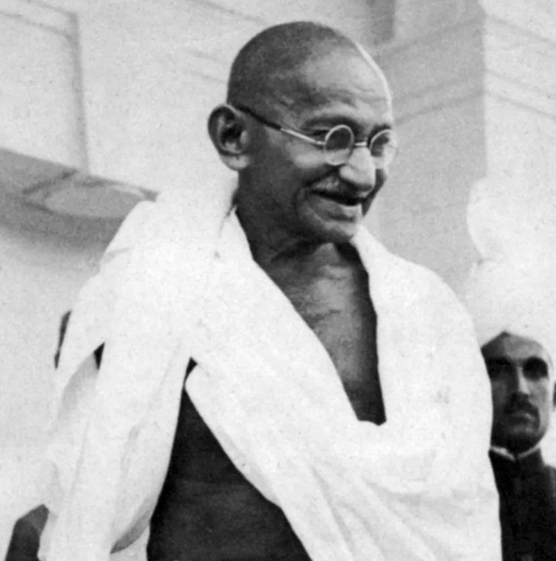
When we look at Gandhi as an institution, we respect the freedom struggle he led. He
began his Satyagraha journey in South Africa, a different country with a different culture. In
actuality, some people continue to feel anxious about leaving their hometown. Gandhi
demonstrates unstoppable strength, demonstrating the power of Truth, which transcends
cultures and traditions which is true everywhere in the world. With Truth comes Justice.
Justice is the result of Truth. Truth and justice can be compared to twin brothers or as two
things that benefit each other. Gandhi is the symbol of justice and truth. Gandhi is the
institution of Truth and Justice. This editorial helps to understand his idea of justice and
ethical practices are justified and are they just to the society.
The goal of the Satyagraha Gandhi led was to obtain justice, and the pursuit of justice
as a whole is guided by the concept of truth. He spearheaded protests in South Africa against
registration certificates, restrictions on Indian immigration, poll taxes, and the invalidation of
Indian marriages, as well as Transvaal immigration. Tolstoy proposed that the best way to
combat evil was via nonviolent resistance, and Gandhi drew towards this idea. In January
1915, Gandhi travelled back to India. He was already considered “messaih” since South
Africa gave his concept of enormous satyagraha backing. The first acts of civil disobedience,
including the Champaran Satyagraha, the Ahmedabad Mill Strike of 1918, the first Hunger
Strike, and the Kheda Satyagraha, all had great success. With these, Gandhi successfully
applied his nonviolent philosophy to illustrate the concepts of truth and Justice. His
leadership of the entire Satyagraha has had a profound effect on society.
When Gandhi became the leader for the independence fight movement, things started
to change. The non-cooperation movement, civil disobedience, and Gandhi’s Quit India
Movement were all founded on a non-violent philosophy. Gandhi was a living example of
non-violence, as seen by the non-cooperation movement’s withdrawal following the Chauri-
Chaura violence. Gandhi stated that the general public still hadn’t learned or fully understood
the nonviolent approach. His key argument was that a violent movement could be quickly put
down by the colonial government, which would exploit the violent outbursts as justification
for utilising the state’s military strength against the demonstrators. Gandhi’s nonviolent
approach is due to liberal British colonialism, but could he apply it in a fascist-run country
like Germany? In Nazi Germany, would Gandhi’s ideas have survived? Does Nazi Germany
justify Gandhi’s moral maxim, “If one takes care of the means, the result will take care of
itself”? Only in Plato’s “platonic world” is it conceivable. As long as both the means and the
ends do not violate the rights of others, they are acceptable. One of the most immoral ways to
accomplish a goal is through fasting, as suggested by Gandhi. How can a threat to kill oneself
be right, if a threat to murder someone else is wrong? If someone brandishes a gun and
commands them to carry out particular actions, they would prefer to pass away with dignity
rather than violate their moral convictions. However, it would be insulting to the person’s
dignity if someone pointed a gun at his own head and threatened to take action. An individual
would prefer to pass away than subscribe to an incorrect and unethical viewpoint since an
ethical person would not want to be mean to his life. If it is wrong for someone to force
someone to believe what they say by pointing a pistol at them, how can it become right if
they force someone to believe what they say by turning the gun around to point it at
themselves?
Gandhi once embarked on a fast till death to exert pressure on Dr B.R. Ambedkar,
which is one example of how he achieved his purpose (Poona Pact). Ambedkar was forced to
compromise, not because he agreed with the cause Gandhi was fighting for but rather because
he did not want Gandhi to lose his life for it. Gandhi would be mistaken, according to
Ambedkar, to believe that he had changed his heart. He was still confident that he was correct
and Gandhi was mistaken, but he was unable to accept responsibility for the violence Gandhi
insisted on inflicting upon himself through Gandhi’s idea of fast. Ambedkar demonstrated
non-violence, whereas Gandhi’s approach was manifestly violent. Gandhi threatened to
commit himself to exert pressure on Ambedkar in a last-ditch effort. It simply means, “It
doesn’t matter whether I threaten to kill you or commit suicide to convince you of my point of
view.”
It would be a good idea to bring up the Buddha’s nonviolent philosophy in
comparison to Gandhi’s. Angulimala, the Robber in the realm of Pasendi, was converted by
Buddha, however Buddha did not threaten to commit suicide or go on fast if Angulimala did
not accept his teachings. The good that is in you is still alive, Buddha said. It will change you
if you only give it a chance. What if Gandhi had met Angulimala? Would his philosophy of
non-violence and abstaining from food have influenced Angulimala to take a particular
course of action? Gandhi’s life might have been spared by Angulimala, but it doesn’t seem
likely that he would change to stop doing what he had done. In this way, how did Angulimala
the Robber turn good by embracing Gandhi’s teachings?
Gandhi has his own set of beliefs. It would do Gandhi tremendous harm to view him
through the lens of other philosophers. He had unconventional ideas, such as bringing Hindus
and Muslims together in the Non-Cooperation movement, which India needs in this day of
radicalisation. People could be freed from injustice by taking inspiration from Dr. B.R.
Ambedkar and some of Gandhi’s ideas. The country needs Ambedkar’s intellectual and
Gandhi’s concept of Truth. Even Gandhi, who abhorred violence, met his demise at the hands
of a violent technique, and he deeply felt sorry for those who used violence against a
nonviolent person.
(This article had been published in Telangana Today on 4th Jan 2023)